Pages

Showing posts with label osteopathy. Show all posts

Friday, 18 April 2014

Does Osteopathy Really Work?

does osteopathy really work
Based on scientific studies, Osteopathy does generally not really work as an effective therapy. There is no compelling evidence that osteopathic manipulation is effective for the treatment of musculoskeletal pain,[1] or for pediatric conditions.[2]
A 2013 Cochrane Review reviewed six randomized controlled trials which investigated the effect of four types of chest physiotherapy (including Osteopathic Manual Therapy) as adjunctive treatments for pneumonia in adults and concluded that "based on current limited evidence, chest physiotherapy might not be recommended as routine additional treatment for pneumonia in adults."[3]
In the United Kingdom, the National Institute for Health and Care Excellence only recommend osteopathy for the treatment of persistent lower back pain. They say there is no good evidence that osteopathy is effective for non-musculoskeletal conditions and limited evidence that osteopathy is an effective treatment for neck pain, shoulder pain, or limb pain.[4]
For somebody looking to try osteopathy as a treatment the research findings appear to put osteopathy in a very poor light. Of course I as well as all other osteopaths will beg to differ based on the hundreds of clients we have successfully helped. I must admit though osteopathy as I found very early on in my career is not a cure all and all though it did help to successful resolve acute pain, I found it somewhat wanting when presented with chronic pain patterns such as fibromyalgia. Based on this experience, I looked for other factors which were driving my clients symptoms. Through clinical experience of treating 1000's of clients the factors of nutrition, diet, lifestyle and emotional stresses and traumas became important components to consider alongside the structural aspects taught to me at osteopathic school.
I you have any comments or questions please feel free to leave them below.
Dominick Hussey
Osteopathic Manual Practitioner

Monday, 5 August 2013

Foods that may be giving you pain.

As I've mentioned before, as an osteopath working in Ottawa I tend to be the last in line of different
therapists that a client will consult for their pain issues. This is mainly due to many Ottawan's knowing little or nothing about osteopathy. Many, of course, have tried chiropractic, massage and physiotherapy, and because they now sit in my office the results from these approaches have been at most short term. When presented with such people I would often play a bigger emphasis on looking at their diet rather than physical therapy to alleviate their pain. On this note here are my top 7 foods that I find commonly cause pain:

  1. Wheat gluten (Gliadin) - typically causing neck stiffness, chronic pain between the shoulders and lower back pain but can effect joints such as knees and hips. It is also linked autoimmune arthritis such as rheumatoid arthritis.
  2. Caffeine - Most notably associated with neck and lower back pain.
  3. Soya - typically associated with shoulder pain.
  4. Fluoride - although not a food, it is found in our drinking water, typically associated with finger stiffness and arthritis.
  5. Artificial Sweeteners - most often associated with lower back pain.
  6. Dairy particularly cheese - typically associated with sinus headaches and migraines.
  7. Night Shade vegetables particularly potatoes and tomatoes - associated with headaches, migraines, upper back pain, and heavy legs.
  8. Antibiotic feed chicken - typically causes general joint pain and stiffness.
This list is not exhaustive but gives you the most common foods and food additives which I find at the root of my clients pain issues.

If you know of any other foods that you know give you pain please let me know in the comments box below.

Monday, 22 July 2013

Coffee tastes good but what does your body think

A chiropractor friend of mine referred me a client who she had been treating for chronic long term neck pain. Her symptoms had improved considerably since her initial visit over a year ago however she required regular maintenance treatments every 2 weeks to keep her symptoms at a manageable level.

Where new clients have been receiving physical treatment already I am more inclined to look for other underlying reasons for clients pain issues. Chiropractic care is very effective but once you stop having regular adjustments the problem soon re-emerges.

One of the standard assessments I do with any new client is to test their individual muscles. I can then see which ones are not working as well as they should be. This does not mean they are weak and you need to get the client to work on those muscles. These muscles lack stamina or they give way quickly when tested. As an Applied Kinesiologist, I am able to isolate individual muscles to test their function.

 In Applied Kinesiology, each muscle is associated with different organs, nutrition, meridians and spinal levels. They are are also prone to effects of different food intolerances. Clients with neck pain often have weak Sternocleidomastoid muscles (found in the front of your neck). These muscles, in my experience, are particularly prone to the effects of caffeine in coffee by reducing it's function or stamina. When this occurs other muscles in the neck have to compensate and eventually they become tired themselves and go into spasm.

During her initial consultation, the client mentioned that she regularly drank 4 cups of coffee per day,
which immediately caught my attention. During her examination, I tested to see if her body's muscle's reacted to coffee by getting her to hold a vial containing caffeine and seeing if one of her shoulder muscles (which was strong on initial testing) weakened to testing. It did, and so this was a good indication to myself and the client that caffeine may be playing a role in her neck issues.

At the end of the consultation I advised the client that to get lasting resolution of her neck pain she needed to cut out coffee. This is no easy ask for most clients but this lady was keen to find a solution to he longstanding and somewhat debilitating neck pain. She totally cut out all coffee and promptly suffered with a headache over the next four days. This was a normal withdrawal symptom of caffeine. The headache disappeared and by the time she came for her follow up treatment the following week her neck pain was 90% better. Within 3 weeks, the pain had disappeared. As well as suffering from neck pain she had also mentioned she was often constipated, her energy was low, she was sleeping better, and her lower back and knees were no longer sore.

Tuesday, 19 February 2013

Shoulder pain, your Thyroid and Soya

The food we eat has an enormous effect on our bodies. I see this in virtually every patient that walks into my office. I have recently been treating two clients for chronic shoulder pain. Shoulder problems are, speaking from my own experience, notoriously difficult to treat. The same was true for these two clients. In both cases, their pain had started without any particular reason. Treating them using massage and osteopathic manipulation had seen only minor improvements.

There had to be a deeper root cause.

When problems don't respond to physical treatment then if I am looking deeper the first place I look is the persons diet. There are certain foods that I know from experience have caused clients issues in the past. On questioning both these clients both were eating large amounts of soya. The man was having soya based protein powder shakes every morning and the woman had been consuming soya milk as she was intolerant to cows milk.

There is a lot of misinformation about the health benefits of soya.

The main benefit is that it has a positive effect on the incidence of breast cancer in the far east. It is true that there is less breast cancer in far eastern countries like Japan where they eat large amounts of soya, but they eat soya sauce. This is totally different in nature to the highly processed products that we see in the western world which is made primarily from highly toxic genetically modified soya beans.

So how is soya bad?

Soy contains a number of substances that are harmful to your body and in particular the thyroid. The thyroid is the gland found in the base of your neck that controls the rate at which you burn food. One of these substances is soya gluten which is similar in structure to the gluten we find in wheat. Wheat gluten has been shown in research to be linked to the thyroid autoimmune disease, Hashimoto's. This disease occurs when your body mistakes the proteins in your thyroid for the gluten protein and attacks it. Because soy gluten is similar in structure to wheat gluten so the same problem can arise if you eat too much soya.

With your thyroid under attack so this obviously has a negative effect on how well it works.

The medical term for a reduction in the function of your thyroid is hypothyroidism. The typical symptoms for someone with an under active thyroid include fatigue, weight gain, sensitivity to cold, numbness in the fingers, constipation, depression and muscle and aches and pains. Not all these symptoms need to present but the last one on the list is the most relevant for my two clients.

The exact mechanism as to why a person's shoulder should be effected can not be explained using western science.

However there is a connection when you look at at it from the practice of Chinese Acupuncture and Applied Kinesiology which connects different organs and glands to particular muscles. Your thyroid is associated to the Teres Minor muscle in your shoulder. So when the function of thyroid is reduced to this effects the strength of the muscle and so your shoulder is likely to develop a problem.

A simple answer to a chronic problem.

Suffice to say I duly advised both clients to remove soy and a few weeks later their shoulder pain was gone!

If you have been suffering from chronic pain which has been unresponsive to physical treatment then looking at your diet could be the next best step to finding an answer. Let me know if you have any questions or comments below.


Sunday, 17 February 2013

Caveman Osteopathy - The Paleo Solution

There were of course no osteopaths around in the time of the cavemen but also there were far fewer chronic diseases either. What cavemen osteopathy refers to is not treating your bad back by bashing it with a big club but getting you to eat more like a cavemen. Probably the main root cause of my clients health problems is their diet.

The caveman or paleo diet is becoming more popular in main stream media. I myself have been Paleo for the last year in which time I have lost 30 pounds and my blood pressure is now a perfect 120/70 compared to 140/90. I have also seen positive results in a number of my clients who I have encouraged to follow the same diet helping to rid their bodies of chronic pain.

While many detractors may say this is just another fad diet I would argue it a lifestyle choice which has proven successful for 250,000 million years, which is as long as our ancestors have roamed the earth. It is only since the introduction of agriculture and grains that most of our modern health problems have emerged.

The paleo lifestyle is simply about:

  1. Eating more whole foods that provide better food for your body, and
  2. Avoiding processed, refined foods, nutrient-poor factory foods.
This means avoiding all grains, legumes (beans) refined sugar and pasteurized dairy products.

Put simply: JUST EAT REAL FOOD!

Many people see eating real foods as hard work and time consuming, but it really is not. It may be an adjustment, but for many who have made that leap back in time, the effect on their health and general wellbeing is will worth the sacrifice.

The driving principle behind Caveman Osteopathy is about treating the root cause of disease. While there are many other root causes getting a person eating real food can only help to make their body stronger and more resistant to the challenges of the modern world. I will be writing much more about this subject but you are interested in reading more about the science behind this way of eating, I recommend the following books:
  • The Paleo Diet - Dr Loren Cordain.
  • Practical Paleo - Diane Sanfillippo.
  • The Paleo Solution - Robb Wolf, Biochemist.


Saturday, 2 February 2013

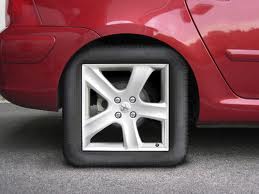
Square tyres don't roll - structure governs function

There is a very old saying in medicine that says "square tyres don't roll". What this basically means is that  the structure or shape of your body will influence it's function. The idea that structure governs function is a guiding principle to many osteopaths. Let me give you a couple of examples where a persons structure effected their function and more importantly there health.

Imagine somebody who does not exercise enough and gains a whole bunch of weight. That excessive weight gain we lead to excess pressure on the heart and joints. So over time excess weight will lead to heart disease, joint pain and arthritis.

Another example of where structure effects function is spinal scoliosis. This is where a person is born with a S-shape curve. Having a mis-shaped spine will effect the function of the spinal nerve roots and so cause problems with your muscles and organs.

The difference between these two examples is that the problems caused by the excess weight are avoidable while people simply inherit a scoliosis. Put another way the health problems you develop because of weight gain are a matter of choice. You either choose to eat a healthy diet and exercise regularly or you don't. Health is often a matter of choice, would you rather have round tyres and enjoy life.

Friday, 20 April 2012

What do osteopaths treat?

Osteopaths are generally known to treat musculoskeletal pain conditions such as:
  • headaches
  • neck pain
  • back pain
  • hip pain
  • knee pain
  • ankle and foot pain
  • General muscle pain such as Fibromyalgia
  • Joint problems caused by osteoarthritis and rheumatoid arthritis.
As well as musculoskeltal pain osteopaths also can help with physiological conditions such as:
  • Digestive issues such as Coeliac Disease, Crohns, heartburn, indigestion, IBS (Irritable bowel syndrome), Ulcerative colitis.
  • Menstruation and menopausal symptoms.
  • Respiratory conditions such as asthma, recurrent sinus and throat infections.
  • Skin conditions such as dermatitis and eczema.
Osteopaths also use a technique called Cranial Osteopathy, which is similar to craniosacral therapy, that is excellent for babies and children. Conditions that can be helped include:

  • Croup
  • Digestive issues
  • Feeding problems
  • Hyperactivity
  • Trauma from long birth/labour
These are just a few of the many conditions osteopaths treat. 

Monday, 26 March 2012

What is Osteopathy?

What is Osteopathy?

Osteopathy is a 100 year old healing system which was developed by Andrew Still in the USA in the early 20th century. Students of Andrew Still took Osteopathy to the United Kingdom where it grew slowly in popularity and developed a small but loyal following. It was only towards the end of the 20th Century that Osteopathy was formally recognized in both the USA and the UK. In both countries the term osteopath is a protected title under law. Osteopathy in Canada is a growing profession but still not widely known by the population. There are only 800 osteopathically trained practitioners working in Canada, the majority of those in Ontario and Quebec.

Osteopathy is a whole body approach to diagnosing and treating musculoskeletal pain conditions. Osteopathic manual practitioners as the majority of osteopaths are known in Canada diagnose and treat using their hands. Using a highly developed sense of palpation they are able to feel areas of dysfunction in the body's muscles and joints. These areas are seen as blockages to your body's innate ability to heal itself (your immune system). Osteopathic manual practitioners are taught to gentle remove these blockages by manipulation of the fascia, muscles joints and spine. It is important to note that the whole philosophy of Osteopathy is to help the body help itself. This means you get a much deeper and longer lasting healing to the body.

To find out more about Osteopathy in Ontario you can go to the Association of Osteopathic Manual Practitioners of Ontario website. If you have any queries or questions regarding this article please leave it in the comments below.

Sunday, 25 March 2012

What is an Osteopath?

What is an Osteopath?

In Ontario, where I practice, the only people who are legally allowed to call themselves an "Osteopath" are members of the College of Physicians and Surgeons of Ontario as per the Medicine Act of 1991. To become a member of the College you must have completed a Doctor of Osteopathy or a Doctor of Osteopathic Medicine degree. At present this degree is only available in USA and not Canada. Hence, only a handful of US educated practitioners who are members of the CPSO can legally call themselves an Osteopath or Osteopathic Physician.


Ontario Association of Osteopathic Manual Practitioners
The majority of practitioners practicing Osteopathy in Ontario are called Osteopathic Manual Practitioners and are members of the Ontario Association of Osteopathic Manual Practitioners (OAO). The membership of the OAO is made up of Canadian and Foreign trained in Osteopathy. I am a United Kingdom trained and have a Degree in Osteopathic Medicine. Osteopathic Manual Practitioners that are trained in Ontario will have the designation DOMP or DOMTP after their name, which signifies that they have a Diploma of Osteopathy. In the UK, as in Ontario, the title Osteopath is a protected in law by the 1991 Osteopaths Act. The regulating body for Osteopaths in the UK is the General Osteopathic Council (GOC). Only registered members, of which I am, can use the title, Osteopath in the UK. As a member of both the OAO and GOC, it is mandatory that you complete a minimum amount of continuing education to maintain a strict code of practice. The OAO, unlike the GOC, is not a regulatory body but it's  membership are working towards this goal with the Government of Ontario and Canada.

When looking for a therapist practicing Osteopathy in Ontario it is important to check their qualifications and to what professional associations they belong.

If you have any questions regarding the above blog or general queries about osteopathy please leave them in the comments below.

Thursday, 22 March 2012

What do Osteopaths do?

"What do Osteopaths do?"

As an Ottawa Osteopathic Manual Practitioner, this is a frequent question for me. Here are a few facts that might help answer that question:

Osteopaths are trained to diagnose and treat pain originating from your musculoskeletal system. They treat primarily with their hands using gentle manipulations, mobilisations of your joints, muscles and spine. One of the main principles taught osteopaths is that the body has an innate ability to heal itself. So when an osteopath is treating you they are helping your body to help itself. They are expert at identifying physical causes of pain including muscle strains, ligament sprains, joint issues and spinal misalignments.


When assessing your pain issues your osteopath will take into account not only where the pain is located but also your overall health and how that is interacting with your presenting problem. Osteopaths are often trained in diet and nutrition and understand the close link between the health of your musculoskeletal system and the food you eat. They have a truly holistic approach to health.

All Osteopaths are trained in pathology which is the study of disease. They learn this because sometimes physical pain can originate from a disease process which is happening in the body. This knowledge means that they can identify conditions that are not appropriate for osteopathic treatment and in such a case they will refer you to your physician.

Osteopaths also trained to identify and treat non-disease physiological problems which have  a structural origin. For example, stomach or tummy problems can often be caused by restrictions in the spine that can be easily resolved by osteopathic treatment.

Osteopaths are trained in pharmacology, which is the science medication, they have a good understanding of the effects and side effects of drugs this is extremely important as if clients are taking certain medication this can contraindicate them from particular types of osteopathic treatment.

These are just a few of the things what do osteopaths do?

Friday, 16 March 2012

Whats the difference between an Osteopath and a Chiropractor?

This is probably the commonest question I have to answer when ever I mention that my job is an osteopath. It's a tricky question to answer since I have never been to see a chiropractor either personally or professionally. The knowledge I have gathered about the subject is through some reading but mostly from many of my clients who have received chiropractic care.  Despite this I shall put some of my own light on the matter.
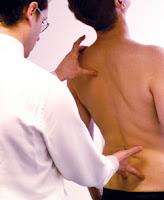
When I left osteopathic college back in 1997 I had been taught how to diagnose musculoskelatal pain and how to differentiate that from other conditions that mimic the same symptoms. Chiropractors essentially learn this as well.

When you first visit either a chiropractor or osteopath both will sit down with you and ask you questions about the problem you need help with, your past medical history, your family's medical history, medications you might take and so on. This is called a case history. These questions help us determine whether this is a musculoskeletal problem or if there is any underlying disease or pathology causing your symptoms.

At this point, both chiropractors and osteopaths carry out a physical examination. This is used to help further define the nature of the musculoskeletal cause of your problem or the underlying pathology. Many chiropractors at this point have the tendancy to take xrays of the effected area. This is prudent if you suspect some disease of the joints or bones but many chiropractors use it to determine misalignment  of the spine. Xrays are a necessary evil if you suspect pathology but the dangerous effects of xrays is well documented.

Once the examination is complete both chiropractors and osteopaths will give you a summary of their findings, what diagnosis they have come to, whether they think the treatment they offer will help and a treatment plan. With treatment plans there seems to be a difference in policy between chiropractors and osteopaths. Chiropractors appear to be much more rigid in their treatment plans which seem to be dense and long. For example, a recent client said she had been seeing a chiropractor, 3 times a week for the 1 year and then 2 times a week for the second. Osteopaths, in my experience, will often suggest a couple of treatments per week for the first 2 may be 3 week and then treatments are progressively spread out.
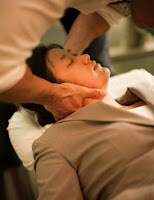
Both chiropractors and osteopaths are taught how to manually manipulate the spine and other joints in the body. Both do this with the aim of increasing the range of motion in restricted joints. From my clients experiences adjustments by chiropractors seem to be more aggressive in nature and some have expressed apprehension when talking about the subject. There also seems to be a tendency chiropractors use adjustment as their exclusive method of treatment. Osteopaths in general are taught a number of different physical treatment approaches including massage, stretching and exercise therapy.

Chiropractors place a strong emphasis on the health of the spine and it's effects on the muscles and the rest of the body.  Osteopaths have a different slant on how they view health in that they believe in the body's innate ability to cure itself. The health of the spine is an important part of that but is only one part of the body. Osteopaths look at the health of the whole body and specifically what is stopping the your body's immune system from helping it self. Osteopaths appear to have a much more holistic approach. They tend to look beyond the spine and look at underlying factors that may be contributing to your body's imbalance. One common factor is what you put in your mouth. This, enviromental factors, lifestyle and stress have a huge effect on the body's ability to fix itself.

So that is some of my light on the difference between chiropractors and osteopaths. I'm sure many will have opinions and my discussion is far from exhaustive but comments will be eagerly accepted.

Sunday, 19 February 2012

Back pain relief: Do it yourself

Lower back pain is one of the commonest conditions I see in my practice. As an Osteopath working in Ottawa I am normally the end of a long line of physical therapists that back pain sufferers consult. Osteopathy is very much a mixture of many of those therapies as we a re trained to use many of the techniques used by chiropractors, physiotherapists and RMT's. Therefore it is unlikely that I am going to get any further with relieving peoples back pain.

So what's the answer?

The answer is often within the person themselves. What are they doing to their bodies that makes them hurt much. The first thing I look at is what they are putting in their mouths. Much of today's processed or even fresh foods are full of health time bombs. My top five food lower back pain time bombs are:

  • Caffiene
  • Artificial Sweeteners
  • Antibiotics
  • Fluoride 
  • Gluten 

By getting lower back pain sufferers to avoid some or all of these I have seen amazing transformations in their pain levels and general wellbeing. Try it you might be pleasantly surprised.

Dominick Hussey

Osteopath and Functional Medicine Practitioner

Osteopathy and Functional Medicine

Tuesday, 16 February 2010

Osteopathy and Tennis elbow.

Tennis elbow is inflammation of your forearm muscle tendons or tendinitis. Tendons usually become inflamed when the muscles they attach to become tired because over overworking. Muscles overwork usually because they are compensating for muscle weaknesses elsewhere. In my experience this muscle weakness can usually be found in the shoulder and is usually either the corocobracialis, subscapularis or teres minor muscles.

In Osteopathy, muscles are linked to particular nutrients and as such weakness can indicate deficiencies in those. For example, Corocobracialis is related to vitamin C, the Subscapularis is linked to B vitamins, and the Teres minor is linked to iron. By identifying which muscle is weak so the weakness can be resolved using a simple change in nutrition and as a consequence the forearm muscles will no longer have to overwork.

Dominick Hussey

Osteopath and Functional Medicine Practitioner

Osteopathy and Functional Medicine

Monday, 1 February 2010

Osteopathy, Back Pain and Water - Could Water Be the Answer to Your Lower Back Pain?

For many people, maybe like yourself that suffer with lower back pain a visit to their local chiropractor, physiotherapist or osteopath can be a god send. But how many of you have to go through the same process again months or even weeks later? The problem is that by using just manipulation or massage you are not getting at the underlying reason for the problem. This article takes a look at how a few litres of water a day can give you long term relief from your lower back pain.

One of my failings as a business man is that I get my clients better too quickly and that I am able to give people the right advice to keep their lower back pain for long periods of time. I am happy with that because it makes me a good osteopath and also because it would drive me crazy seeing the same people again and again week after week.

Whenever I mention that I am an osteopath the conversation inevitably gets on to lower back pain. They say that they have had it for years and they usually have to go and see their chiropractor, physiotherapist, or osteopath who sorts them out over a few sessions. This is a bit of an occupational hazard. The situation gets more uncomfortable when they ask me for my advice. The reason it is uncomfortable for me is because, through experience many people aren't going to like my answer. Many people through conditioning are happy to accept an explanation of "your vertebra is out of line" or, "you have a trapped nerve". When I start to mention things like diet or nutrition I quickly see peoples eyes glaze over and they quickly go on the defensive, saying that their diet is fine.

For people a bit more open such yourself the simple answer is that if people are dehydrated then it can lessen the strength in the muscles in your lower back. In particular the psoas muscles which large core muscles that are important for stabilising the back. These are particularly sensitive to changes in hydration.

So if your lower back pain starts to resurface again try drinking a pint or two of water and see what happens.

Dominick Hussey

Osteopath and Functional Medicine Practitioner

Osteopathy and Functional Medicine


This information given in this article is not intended to replace the services of a physician. Information in this article is not a substitute for professional medical advice. You should consult a physician in all matters relating to your health, and particularly in respect to any symptoms that may require diagnosis or medical attention. Any action on your part in response to the information provided in this is article at the reader's discretion.

Wednesday, 27 January 2010

Welcome to my Capital Osteopathy Ottawa blog

The purpose of this blog is to highlight some important health issues that I encounter in my Osteopathic practice.....feel free to make your comments...kind regards Dominick.